
Systèmes de micros professionnels pour instruments acoustiques : guitare acoustique folk, guitare manouche, guitare classique et flamenca, harpe celtique et à pédales, contrebasse, violoncelle, alto et violon, mandoline, oud, kora et n’goni, piano, hang, handpan, balafon, vibraphone etc.
|

Microphones Aériens Miniatures |

Les plus vendus
 J48-Series
inside J48C
Plage de prix : 259,00€ à 368,00€Micro de contact C1, C2 ou C3, installation fixe (perçage requis), sortie Jack asymétrique, fonctionne sur pile 9 volts, option de bouton de volume ou molette, forts niveaux sur scène…
Choix des options Ce produit a plusieurs variations. Les options peuvent être choisies sur la page du produit- X48-Series
X48C
Plage de prix : 289,00€ à 399,00€Micro de contact C2, C3 ou C4, installation amovible, fonctionne sur alimentation fantôme, forts niveaux sur scène…
Choix des options Ce produit a plusieurs variations. Les options peuvent être choisies sur la page du produit - X48-Series
X48JC
Plage de prix : 329,00€ à 449,00€Système avec électronique déportée, installation fixe ou amovible du micro de contact C2, C3 ou C4. Fonctionne sur alimentation fantôme, sortie XLR symétrique, forts niveaux sur scène…
Choix des options Ce produit a plusieurs variations. Les options peuvent être choisies sur la page du produit - J48-Series
J48C
Plage de prix : 269,00€ à 378,00€Micro de contact C1, C2 ou C3, installation amovible, sortie Jack asymétrique, fonctionnement sur pile 9 volts, forts niveaux sur scène…
Choix des options Ce produit a plusieurs variations. Les options peuvent être choisies sur la page du produit - BOX-Series, BOX4
J-BOX4
299,00€Préampli J-BOX4 Blue Line — Fonctionne avec tous les micros Ischell, batterie rechargeable par USB-C, batterie auxiliaire 12v possible, utilisation en externe ou en fixe dans l’instrument, nombreuses options…
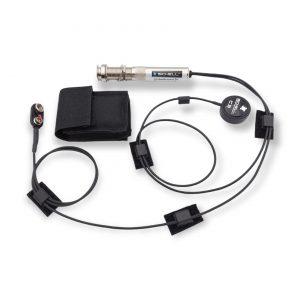
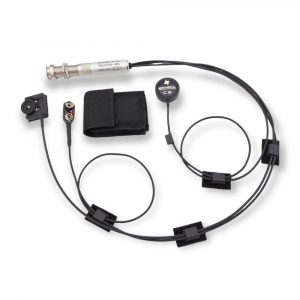


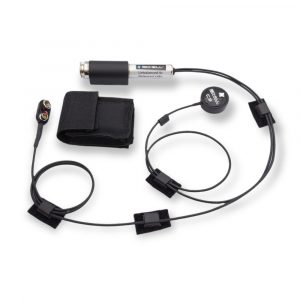
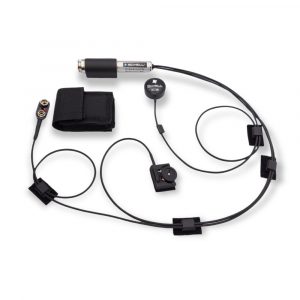



I purchased the Ischell X48XC model C4-T mic for performing my acoustic violin in jazz groups ranging in size from small workshops to large loud ensembles. Feeback resistance of this mic is amazing. Previously I was limited to playing electric violins in jazz ensembles. Now, I can bring a rich acoustic sound to these groups.
I ordered the long cable so that I could attach the belt pack to a small pedalboard containing tuner, compressor, and EQ pedals, and a preamp, and IEM port.
Ischell team support was outstanding (and patient) during the installation phase.
Playing unamplified. For when I’m playing unamplified, I disconnect the XLR cable. Then, to keep the mic connector from flopping around, getting in the way, and potentially getting damaged, I temporarily attach it to the top of a different shoulder rest that has a small piece of nano tape (see attached photo). It’s easy to detach the connector and the nano tape leaves no residue.
Pedalboard (see attached). The Peterson StroboStomp Mini tuner allows me to keep my instrument in tune while muting audio output to my amp. I can also hear myself play through my IEMs without having the sound broadcast though my amp. The Empress MKII compressor does not color the natural violin tone but limits extremes of high and low dB levels to better fit in a mix with other instruments. It also helps control excesses of bow noise. The Empress ParaEQ Deluxe, also does not color the natural acoustic violin sound but controls r frequency excess in certain registers to assure a balanced and bow-noise-free tone. The ParaEQ also supports “notching out” feedback-prone frequencies. The Tube MP Studio V3 preamp allows me to connect to small amps like the Positive Grid Spark 2 (no preamp or XLR input) for use in small jazz workshops when space is at a premium and sound levels are relatively low. For larger, louder groups, I connect my Ischell mic directly to a more powerful amp like the Fishman Loudbox Performer and run that amp’s FX loop though my pedalboard to provide consistent tonal control (the attached pic shows the Ischell belt pack connected externally to my Fishman amp). I also have set up an IEM output port (using a LEHLE P-SPLIT III) for situations where the group is so loud I have trouble hearing what I’m playing.
X48C4-T Super micros!!
Je les utilises en stéréo pour un piano droit Yamaha.
La balance est superbe et la présence du son incroyable.
Je les conseils vivement!!
X48C4-T Je suis très satisfait de ce micro qui permet une restitution fidèle du son de ma contrebasse en Pizz comme à l’archet. L’installation est rapide et les différentes positions suggérées donnent des résultats vraiment différents. Cela permet de trouver le son recherché et d’en affiner le réglage.
Je le recommande vivement.
Ich habe das C3 Mic auf meinem laminierten Kontrabass (ca. 1950/60 Osteuropa) installiert, am natürlichsten war der Klang ca. mm unterhalb des Stegfußes an der E-Saite, direkt auf der Linies des Bass Balkens. Auf der Position unterhalb des anderen Stegfußes an der G-Saite klang es nicht so gut. Der Sound Post befindet sich bei diesem Bass ca, 20 mm unterhalb des Stegfußes. Ich finden Klang ziemlich gut und viel schöner als an Piezo Abnehmer. Klare Empfehlung von mir es auch auf laminierten Bässen zu probieren. Danke für den Support an Fischer!
Ce micro est excellent pour ma harpe celtique, autant pour la scène qu’en complément pour un enregistrement studio. je recommande vivement!
»The pickup performs exceptionally well, producing a warm and natural tone of my Cithare. The frequency separation is great, keeping both low and high frequencies clear and distinct. »
X48JC3-F Transformer version